


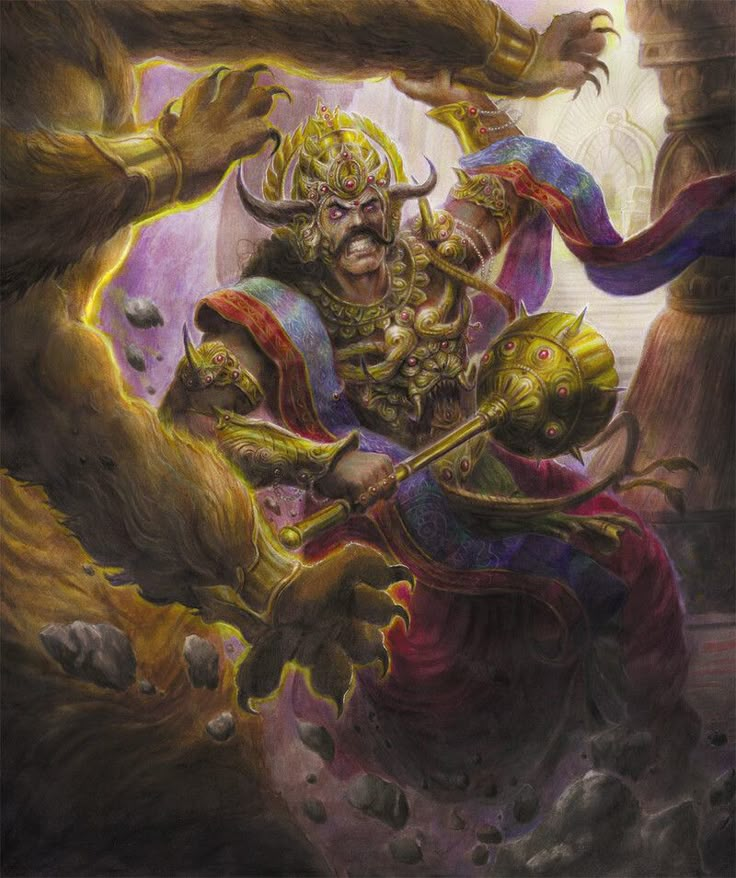
In Hindu mythology, few names elicit the clash between arrogance and devotion as powerfully as Hiranyakashipu. A mighty demon king of the Daitya lineage, he was feared for his strength and cruelty, yet remembered most for his altercation with Lord Vishnu. His story is not just a story of power and destruction but an eternal lesson in faith, humility, and divine justice.
Rise of a Tyrant
Born to sage Kashyapa and Diti, Hiranyakashipu belonged to a lineage of formidable beings. His hatred towards Vishnu was deeply personal—Vishnu, in his boar incarnation (Varaha), had slain Hiranyaksha, Hiranyakashipu’s brother. Burning with vengeance, Hiranyakashipu undertook intense penance to appease Lord Brahma.
Impressed by his devotion, Brahma granted him a boon that made him almost impossible to kill. No man or beast could harm him; no weapon could pierce him; neither day nor night, nor earth nor sky, could claim him. Empowered by this boon, Hiranyakashipu grew arrogant, declaring himself supreme and demanding that all beings worship him instead of the gods.
Prahlad’s Devotion: The Spark of Rebellion
Ironically, the tyrant’s greatest opposition came from within his own household. His son Prahlad became a devoted follower of Vishnu, refusing to bow to his father’s commands. Enraged, Hiranyakashipu subjected Prahlad to countless punishments and assassination attempts, yet divine grace shielded the boy each time.

The conflict between father and son became a symbol of the eternal struggle between ego and faith.
The Challenge to Vishnu
The tension reached its peak when Hiranyakashipu mocked Prahlad’s devotion, asking if Vishnu was truly everywhere. Prahlad’s unwavering answer, “He is everywhere,” pushed the king to strike a nearby pillar. To his shock, the pillar split open, revealing Vishnu in his fierce Lord Narasimha form—half man, half lion.
A Death That Defied the Boon
Narasimha’s arrival was the perfect solution to Brahma’s boon. He was neither man nor beast. Twilight, neither day nor night, set the stage. The courtyard’s threshold was neither indoors nor outdoors. Placing Hiranyakashipu on his lap, Narasimha used his claws instead of weapons to tear the tyrant apart.

This extraordinary death underscored a profound truth: no matter how carefully one tries to outwit fate, divine justice finds a way.
Lessons and Symbolism
Hiranyakashipu’s tale transcends mythology. He represents unchecked ego, tyranny, and the illusion of invincibility. In contrast, Prahlad embodies faith and surrender. Together, their story reinforces the idea that devotion to righteousness ultimately prevails over arrogance and oppression.
Feature Image Credit: Pinterest.