


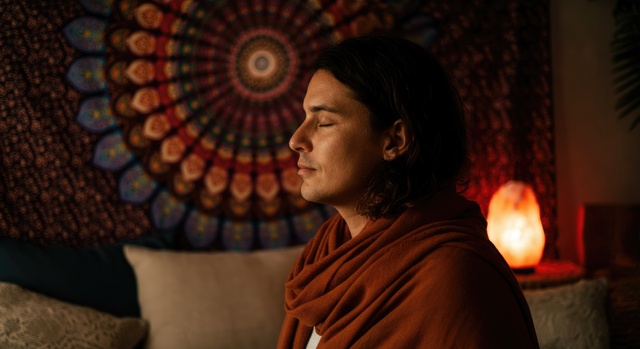
Yoga Nidra, often described as “yogic sleep,” is a guided relaxation practice where the body rests deeply while the mind stays lightly aware.
You lie in Śavāsana and follow verbal instructions that ease you into a calm, almost dream-like state. Modern science and traditional yoga both recognize it as one of the most effective practices for restoring the nervous system and improving mental balance.
Yoga Nidra Practice
Yoga Nidra follows a structured flow:
- Relaxing the body and calming the breath
- Setting a simple intention (sankalpa)
- Eotating awareness across the body
- Observing opposite sensations (warm/cool, light/heavy)
- Guided imagery before slowly returning to wakefulness

Health Benefits of Yoga Nidra
Modern research highlights several strong wellness benefits, such as:
- Better sleep quality – Helps people with insomnia by slowing brain waves toward alpha and theta states.
- Reduced stress and anxiety – Creates deep nervous-system relaxation and emotional balance.
- Support the mood – Regular sessions can reduce mild depression symptoms.
- Relief from chronic pain – Lowers physical tension and eases conditions like arthritis-related discomfort.
- Improved regulation of blood pressure and immunity – Lowered stress load may support overall physiological stability.
- Enhanced emotional resilience – Helps manage overwhelm and resets the body after difficult days.
Traditional Significance
In yogic philosophy, Yoga Nidra is linked to pratyāhāra and deeper meditative stages where subconscious impressions soften. This relaxed-yet-aware state is believed to aid inner clarity, mental purification, and emotional release.
Cultural and Practical Relevance
Beyond spiritual traditions, Yoga Nidra is now used in wellness programs, schools, corporate settings, and therapy contexts because it is accessible to all ages and requires no physical effort.

How to Begin Safely
- Practice for 15–30 minutes in a quiet, dim space
- Lie comfortably with light support
- Follow a trusted guided recording
- If you have a trauma history, begin under professional guidance
With consistent practice, Yoga Nidra becomes a simple tool to improve sleep, regulate emotions, and restore inner calm.
Feature Image Credit: Vecteezy.com (free for commercial use)