


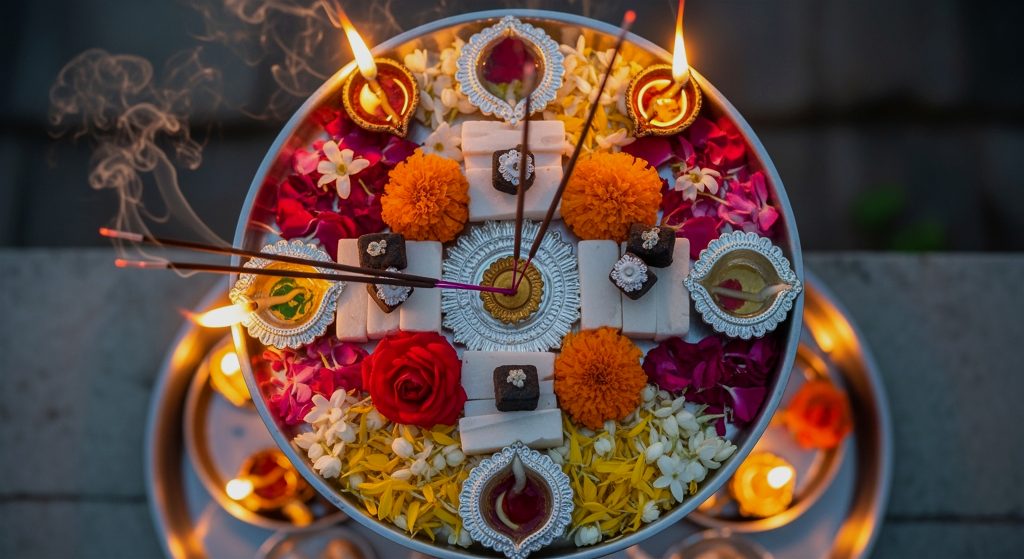
In Hindu mythology, the most intense divine intervention did not happen in broad daylight or deep night. It happened at twilight.
Lord Vishnu appeared as Narasimha at sandhya — neither day nor night — to protect Prahlada and restore balance. This moment was not accidental. Twilight is a threshold, a pause between states. Hindu tradition calls this period Sayana Kala, a time when divine energies are considered most responsive, and human awareness naturally turns inward.
Sayana Kala Puja draws its power from this exact moment — when the external world slows, and inner forces rise.

How Sayana Kala Affects the Human Body?
Ayurveda sees evening hours as a Vata-dominant phase. Vata governs movement, anxiety, nervous energy, and restlessness.
As daylight fades:
- Digestion slows
- Mental fatigue increases
- Nervous tension surfaces
- The body prepares for rest
Performing puja during Sayana Kala helps stabilize this shift. The rhythmic repetition of mantras, steady breathing, and lamp light work together to:
- Calm the nervous system
- Improve circulation of prana
- Support hormonal balance
- Preserve ojas, the body’s vital strength
This is why evening worship is traditionally recommended for protection, recovery, and longevity, not just devotion.
What Happens to the Mind at Dusk?
Twilight is psychologically vulnerable. Ancient seers observed that fear, confusion, and emotional imbalance often surface after sunset.
Sayana Kala Puja works on the mind by:
- Creating mental boundaries against anxiety
- Grounding scattered thoughts
- Reducing subconscious fear
- Strengthening inner courage

Chanting Narasimha mantras during this time mirrors Prahlada’s unwavering faith. The mind learns steadiness through repetition. Over time, this practice builds fearlessness, clarity, and emotional resilience.
Why Narasimha Is Worshipped During Sayana Kala?
Narasimha is not only fierce. He represents timely protection.
His appearance at twilight symbolizes:
- Protection during unstable phases of life
- Victory over unseen threats
- Strength without cruelty
- Discipline guided by compassion
Sayana Kala aligns perfectly with Narasimha’s energy because both deal with transitions, uncertainty, and inner battles.
Common Mantras Chanted During Sayana Kala Puja
Narasimha Moola Mantra
Chanted for protection, courage, and removal of obstacles.
Traditionally repeated 11, 21, or 108 times during evening worship.
“Ugram Viram Maha Vishnum Jvalantam Sarvato Mukham, Nrisimham Bheeshanam Bhadram Mrityor Mrityum Namamyaham.”
Narasimha Pranama Mantra
Invokes Narasimha’s presence everywhere — inside and outside — creating a protective shield around the devotee.
“Namaste Narasimhaya, Prahladahlada-dayine, Hiranyakashipor vakshah, Sila-tanka-nakhayale. Ito Narasimhah parato Narasimho, yato yato yami tato Narasimhah, bahir Narasimho hridaye Narasimho, Narasimham adim saranam prapadye.”
Narasimha Gayatri Mantra
Used to awaken inner strength and clarity. Best chanted slowly, aligning breath with rhythm.
“Narasimhaya Vidmahe Vajranakhaya Dheemahi, Tanno Simhah Prachodayat.“
Evening Deepa Mantra
Chanted while lighting the lamp, welcoming auspiciousness and dispelling negativity at dusk.
“Deepajyoti Parabrahma, Deepa Jyoti Jana Jyoti, Deepam Darsaya Devesh, Sarva Mangala Mangalam.”

Sandhya Gayatri
A core mantra of evening Sandhya Vandana purifies the mind and balances doshas during the day’s transition.
“Om Bhur Bhuva Svah, Tat Savitur Varenyam, Bhargo Devasya Dheemahi, Dhiyo Yo Nah Prachodayat.”
A Simple Sayana Kala Puja Method for the Home
Sayana Kala Puja does not require complex rituals.
A simple structure works best:
- Sit facing east or north
- Light a ghee lamp
- Take a brief sankalpa
- Chant the Narasimha mantra with a calm breath
- End with silent gratitude
Those familiar with basic kara nyasa and anga nyasa may perform them gently before mantra japa, but householders can keep the practice simple and consistent.
Why This Practice Still Matters
Sayana Kala Puja is not about fear of darkness. It is about preparing the mind and body for rest, strengthening inner stability, and aligning with natural rhythms.
In a modern world filled with overstimulation, evening worship offers:
- Emotional protection
- Mental clarity
- Nervous system balance
- Spiritual grounding
When acknowledged with prayer, it becomes a moment of renewal rather than fatigue.
Even a few minutes of mindful worship during this time can restore balance, protect inner peace, and remind us that strength often rises at the edge — not the center — of our day.
Feature Image Credit: Vecteezy.com (free for commercial use)