


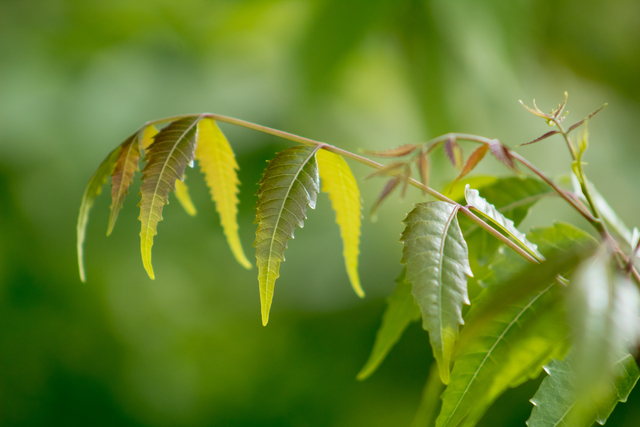
Neem is a sacred tree in Hindu tradition, valued for its spiritual symbolism, Ayurvedic significance, and association with divine protection. Revered as the abode of the Mother Goddess in many traditions, neem represents purity, resilience, healing, and the belief that true well-being begins with inner and outer cleansing.
What Is a Neem Tree?
The neem tree has been treasured in India for centuries as both a sacred and medicinal plant. Known for its naturally bitter leaves and remarkable healing properties in Ayurveda, neem is far more than a tree. It is a symbol of health, protection, and harmony that continues to be respected in homes, temples, and daily life.
Why the Neem Tree Is Sacred in Hinduism
Neem is closely associated with Goddess Shakti, especially Durga, Kali, Sitala Devi, and Mariamman. Many traditions believe the Mother Goddess resides in the neem tree, making it a powerful symbol of protection against illness and negative influences.
Some legends also connect neem with amrita, the divine nectar of immortality, strengthening its reputation as a tree of healing and sacred blessings.

Spiritual Meaning of the Neem Tree
Neem teaches an important spiritual lesson that not everything beneficial is sweet. Its naturally bitter nature symbolises purification, reminding devotees that growth and healing often come through discipline and self-purification. As an evergreen tree, neem also represents resilience, endurance, protection, and the continuous renewal of life.
Ayurvedic Benefits of Neem
For centuries, Ayurveda has valued neem as one of nature’s most powerful cleansing herbs. Its traditional benefits include:
- Supports healthy skin and natural cleansing.
- Promotes oral hygiene and healthy teeth and gums.
- Helps maintain digestive balance.
- Traditionally used during seasonal purification practices.
- Supports wellness during fever-related care in traditional Ayurveda.
- Acts as a natural insect repellent.
- Used in Ayurveda through its leaves, bark, seeds, and oil for various wellness practices.

How Neem Is Used in Hindu Worship
Neem plays an important role in festivals, household worship, and seasonal observances. Fresh neem leaves are offered during pujas, placed on home altars, and used to decorate sacred spaces as symbols of purity and protection.
In many regions, devotees consume neem leaves at the beginning of the Hindu New Year to welcome health, balance, and prosperity for the year ahead. Neem is also used in rituals intended to ward off negativity and invite divine grace into the home.
Why Neem Is Known as the Tree of Protection
Neem beautifully brings together mythology, devotion, and Ayurveda. It is respected as the sacred tree of the Goddess, honoured as a symbol of protection and purification, and cherished for its traditional healing qualities. Its enduring presence in Hindu culture reminds us that nature itself can be a source of spiritual wisdom, well-being, and divine connection.
Plant a neem tree or respectfully include its leaves in your worship to embrace a timeless tradition that celebrates purity, protection, and devotion every day.
Feature Image Credit: Vecteezy.com. (free for commercial use)