


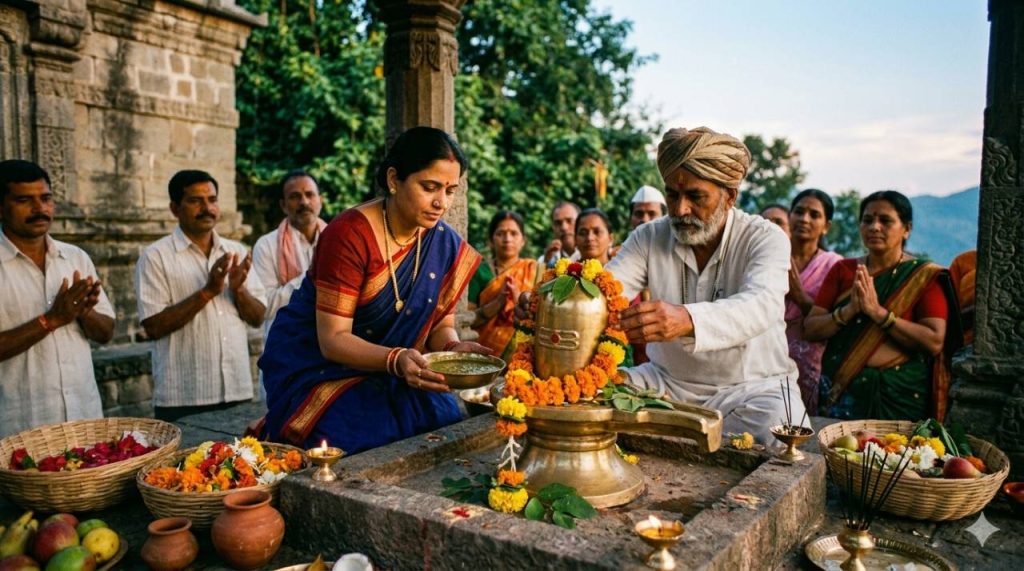
Bhang is a traditional herbal preparation made from the leaves of the cannabis plant, carefully ground and blended with milk, spices, and natural sweeteners.
In the Indian spiritual tradition, bhang is not viewed as an intoxicant but as a sacred substance when used ritually and with restraint. Its cultural roots stretch deep into Vedic, Puranic, and folk traditions, especially within Shaivism.
What Is Bhang in Hindu Tradition?
In ancient India, bhang was prepared from fresh cannabis leaves, not seeds or resin, and consumed in diluted, cooling forms such as thandai.

Ayurveda and ritual texts describe it as a substance that calms heat, quiets restlessness, and supports detachment when taken in small, conscious amounts. Its role was never indulgence but alignment of the mind during spiritual observances.
Bhang and Lord Shiva
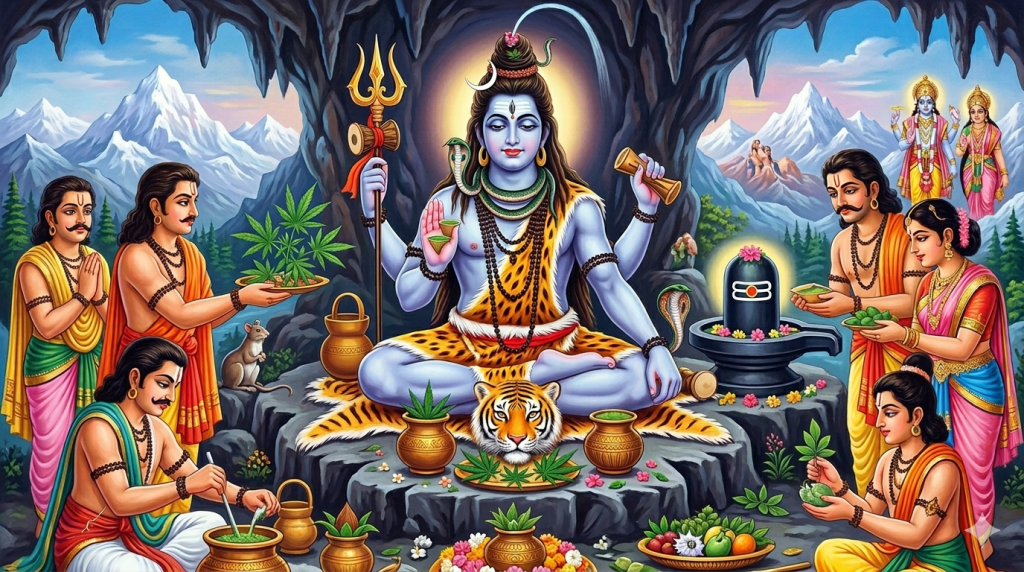
Lord Shiva is revered as Bhangadhara, the bearer of bhang. One popular legend connects bhang to the Samudra Manthan, when Shiva consumed the deadly poison halahala to save creation. Bhang was offered to soothe the intense heat in his throat and restore balance.
Another story speaks of Shiva resting beneath a cannabis plant in the Himalayas during deep tapasya, consuming its leaves and entering profound stillness and bliss.

Because of these associations, bhang became known as Vijaya, meaning victory over suffering and illusion. It is counted among the five sacred plants mentioned in the Atharva Veda and is traditionally offered to Shiva during Maha Shivratri, Pradosha, and Rudra Abhishek.
Spiritual and Symbolic Significance
Bhang represents Shiva’s raw ascetic nature. It symbolizes renunciation, ego dissolution, and freedom from excessive worldly attachment. In a ritual context, the offering signifies the surrender of the restless mind at Shiva’s feet. It also signifies
- Cooling Shiva’s energy: After consuming halahala poison, bhang is said to have soothed Shiva’s intense inner heat.
- Acceptance of simplicity: Offering bhang reflects Shiva’s preference for raw, natural substances over luxury.
- Victory over suffering: Known as Vijaya, bhang symbolizes triumph over sorrow, illusion, and fear.
Ayurvedic and Folk-Healing Perspective
Ayurveda classifies bhang as cooling and grounding in nature. Traditionally, it was used in minute quantities to calm Pitta-related heat, ease pain, reduce sleeplessness, and steady an anxious mind. Folk healers viewed it as a medicine of last resort, never a daily tonic. Modern awareness also reminds us of its psychoactive nature and legal boundaries, emphasizing discernment and guidance.

Spiritual Benefits of Offering Bhang to Shiva
- Ego surrender: Bhang symbolizes letting go of pride, control, and worldly identity before Shiva.
- Mental stillness: The offering represents calming restless thoughts and seeking inner silence.
- Union with Shiva tattva: Aligns the devotee with Shiva’s ascetic, detached, and fearless nature.
- Purification of intent: It is believed to cleanse subtle impurities when offered with devotion.
Feature Image Credit: AI-generated image created with Google Gemini, March 16, 2026