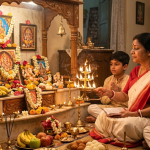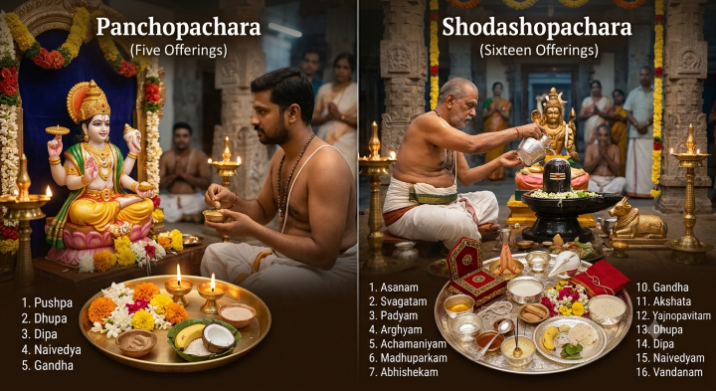
Panchopachara and Shodashopachara are two structured forms of Hindu puja. Both honor the deity as a revered guest, but they differ in the number of offerings, level of detail, time, materials, and occasion. Panchopachara is suited to simple, regular worship, while Shodashopachara follows a fuller ceremonial approach.
Panchopachara Puja: Five Essential Offerings
Panchopachara means five (pancha) offerings or services (upachara). It is commonly chosen for daily morning or evening worship, especially when time, space, or materials are limited.
The five offerings are:
- Gandha: Sandalwood or chandan for fragrance.
- Pushpa: Flowers offered with devotion.
- Dhupa: Incense.
- Deepa: A ghee or oil lamp.
- Naivedya: Fruits, sweets, or other food offerings.
Some traditions also include Padya or Arghya, water offered for the deity’s feet or hands, making six elements while still calling the practice Panchopachara.
Shodashopachara Puja: Sixteen Complete Offerings
Shodashopachara means sixteen (shodasha) services. It presents the deity with complete hospitality, from invocation to formal farewell.
The traditional sequence includes:
- Dhyana/Avahana: Meditation and invocation
- Asana: Offering a seat
- Padya: Water for the feet
- Arghya: Water for the hands
- Achamaniya: Water for sipping
- Snana/Abhishekam: Ritual bathing with water, milk, or panchamrit
- Vastra: Offering new clothes
- Yajnopavita/Abharana: Sacred thread and ornaments
- Gandha: Sandalwood or kumkum
- Pushpa: Flowers
- Dhupa: Incense
- Deepa: Lamp or aarti
- Naivedya: Elaborate food offering
- Tamboola: Betel leaf, nut, spices, and dakshina
- Pradakshina: Circumambulation, traditionally three times
- Namaskara/Visarjana: Prostration and formal conclusion
Panchopachara vs Shodashopachara: Key Differences
| Aspect | Panchopachara | Shodashopachara |
|---|---|---|
| Offerings | 5 core offerings | 16 sequential services |
| Duration | About 5–15 minutes | 30 minutes to 2+ hours |
| Use | Daily nitya puja | Festivals and special rituals |
| Materials | Minimal | More extensive |
| Approach | Simple and flexible | Detailed and structured |
| Hospitality | Brief devotional offering | Full Atithi Satkara |
| Practice | Easy for home worship | Often conducted by priests or trained devotees |
When to Follow Panchopachara
You can use Panchopachara for daily home worship, quick morning or evening pujas, office worship, travel, or situations where materials and time are limited. Its simplicity allows regular spiritual practice without requiring an elaborate setup.
When to Follow Shodashopachara
Shodashopachara is commonly used for major festivals such as Durga Puja, Kali Puja, Lakshmi Puja, and Janmashtami, as well as marriages, naming ceremonies, upanayana, temple consecrations, homas, and important vratas. Its longer sequence can also provide a deeper, more meditative experience.
The Spiritual Choice Is About Bhava
Both forms serve the same purpose: expressing reverence, gratitude, and devotion to the deity. Panchopachara is not a lesser form simply because it has fewer offerings. When Shodashopachara is not practical, Panchopachara can be an appropriate alternative.
The essential element is bhava, or sincere devotional feeling, along with consistency in worship. Choose the form that suits your occasion, capacity, tradition, and state of mind.
Try Panchopachara for simple daily devotion, or follow Shodashopachara for a fuller ceremonial experience.
Feature Image Credit: AI-generated image created with Google Gemini, November 14, 2026.