


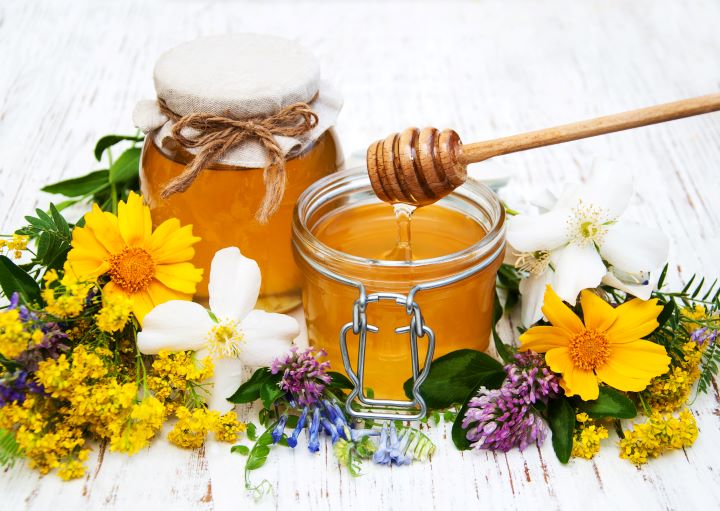
Honey, known as Madhu in Ayurveda, is far more than a natural sweetener. Revered as a healing elixir and “nectar of the gods,” it has been used for centuries to support digestion, immunity, respiratory health, and overall wellness. Ayurveda considers honey a unique substance that both nourishes the body and helps eliminate toxins.
Honey: Ayurveda’s Golden Elixir of Healing
Honey possesses a sweet taste (Madhura Rasa), warming energy (Ushna Virya), and a sweet post-digestive effect (Madhura Vipaka). It helps balance Kapha and Vata doshas, supports Ojas (vital immunity and vitality), and is valued for its ability to cleanse body channels while enhancing the effectiveness of other remedies.
Ayurvedic Honey Benefits for Complete Wellness
When consumed properly, honey supports multiple aspects of health:
- Promotes healthy digestion and nutrient absorption
- Helps digest Ama (toxins) and cleanse body channels
- Supports respiratory health, including cough, asthma, and congestion
- Aids wound healing, skin health, and anti-aging care
- Enhances immunity and energy levels
- Supports weight management and metabolism
- Helps maintain healthy blood circulation and hemoglobin levels
- Promotes restful sleep and calms the nervous system
- Supports dental, heart, and urinary health

The Eight Classical Types of Ayurvedic Honey
Ancient Ayurvedic texts describe eight varieties of honey, each with unique therapeutic uses. Makshikam is valued for respiratory and eye health; Kshoudram and Pauthikam are traditionally used in diabetes management; and Ouddalakam is praised for voice clarity and detoxification. Other varieties support digestion, address anemia, treat worm infestations, and support specific health conditions.
Honey as a Yogavahi in Ayurvedic Medicine
One of honey’s most remarkable qualities is its role as a Yogavahi, a substance that carries herbs deep into the tissues and enhances their effectiveness. It is commonly combined with turmeric, ginger, cinnamon, lemon, ashwagandha, and other Ayurvedic herbs to improve therapeutic results while reducing side effects.
Best Time to Consume Honey for Maximum Benefits
Ayurveda recommends different timings based on desired results:
- Morning (empty stomach): Honey with warm water for detoxification, digestion, and weight management
- Before meals: Supports Kapha balance and digestive function
- Evening: Soothes coughs and respiratory discomfort
- Night: Honey with warm milk promotes relaxation and better sleep

Daily Ayurvedic Honey Rituals
There are several simple ways to use honey effectively. You can cleanse your body by mixing honey with warm water and lemon, boost your immunity by combining honey with turmeric, support your respiratory system with honey and ginger, or apply honey face masks for radiant skin. Regular use in moderation can support long-term vitality and wellness.
Important Ayurvedic Precautions
Ayurveda strongly advises never heating honey above 40°C (104°F), as heated honey is considered difficult to digest and may contribute to Ama formation. It should not be given to infants under one year of age, and excessive consumption may aggravate Pitta, especially in hot climates. Therapeutic intake is generally limited to about one dessert spoon daily.
Why Honey Holds a Special Place in Ayurveda
Honey is celebrated for its rare ability to reduce Kapha despite its sweet taste. It acts as a natural purifier (Shodhana), blood cleanser (Raktashodhaka), rejuvenator (Balya), and immunity builder. Whether used internally or externally, it remains one of Ayurveda’s most versatile and respected natural medicines.
Add a small amount of raw, unheated honey to your daily Ayurvedic routine to support digestion, immunity, and natural vitality. Consistent, mindful use can help you experience the nourishing power of nature’s golden elixir.
Feature Image Credit: Vecteezy.com (free for commercial use)