


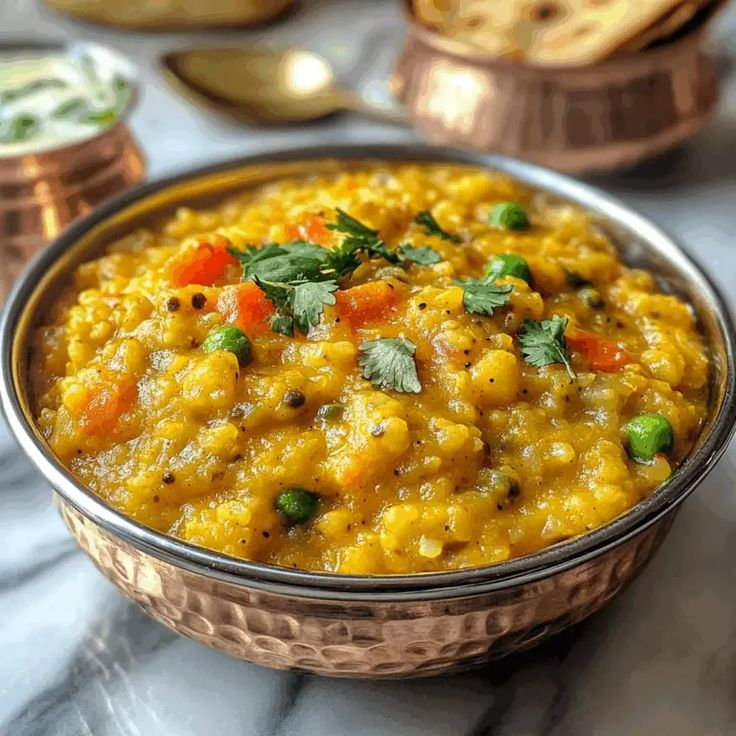
Khichdi, also known as Khichri, Kitchari, or Khechri, is a traditional Indian one-pot meal made with rice, moong dal, ghee, and digestive spices. Revered in Ayurveda and enjoyed for centuries, it is considered one of the world’s oldest continuously consumed foods and a complete, nourishing meal.
Why Khichdi Holds a Special Place in Ayurveda
Known as Krsara in ancient Sanskrit texts and mentioned in the Charaka Samhita, Khichdi is regarded as one of Ayurveda’s most healing foods. It provides digestive rest, supports gentle detoxification, builds Ojas (vital immunity), and uniquely helps balance all three doshas—Vata, Pitta, and Kapha.
The combination of rice and moong dal creates a complete protein, while ghee, turmeric, cumin, ginger, and asafoetida enhance digestion and nutrient absorption.

Khichdi’s Powerful Health and Dosha-Balancing Benefits
Khichdi is valued for nourishing the body while being exceptionally easy to digest.
- Supports healthy digestion without burdening the stomach
- Helps remove Ama (toxins) and promotes natural detoxification
- Balances Vata, Pitta, and Kapha when prepared appropriately
- Improves gut health and digestive fire (Agni)
- Provides complete nutrition with protein, carbohydrates, and fiber
- Aids recovery during illness, weakness, and fatigue
- Supports healthy metabolism and weight management
- Helps relieve constipation and promotes regular bowel movements
- Nourishes growing children and strengthens the body
- Supports liver health and overall vitality
- Provides warmth and sustained energy, especially during winter

Cultural and Spiritual Significance of Khichdi
Khichdi is deeply woven into Indian traditions. It is a cherished food during Makar Sankranti, symbolizing gratitude, prosperity, and the harvest season. It is commonly offered as temple prasad and consumed on Saturdays as an offering to Lord Shani. Its simplicity, affordability, and nourishment have made it a beloved comfort food across generations, communities, and social backgrounds.
When Is the Best Time to Eat Khichdi?
Khichdi is ideal during illness, recovery, weak digestion, detox programs, fasting periods, winter months, and times of physical exhaustion. Ayurveda particularly recommends it for digestive cleansing and for restoring balance. Lunch is often considered the best time to consume it, though it also works well as a light dinner.

Simple Ayurvedic Preparation
Traditional Khichdi combines rice, moong dal, ghee, turmeric, cumin, ginger, asafoetida, salt, and water, cooked until soft and comforting. Dosha-specific adjustments can be made by varying spices and ghee levels.
Enjoy warm Khichdi once a week for digestive cleansing and daily nourishment, and experience improved digestion, balanced energy, and lasting wellness naturally.
Feature Image Credit: Pinterest.