


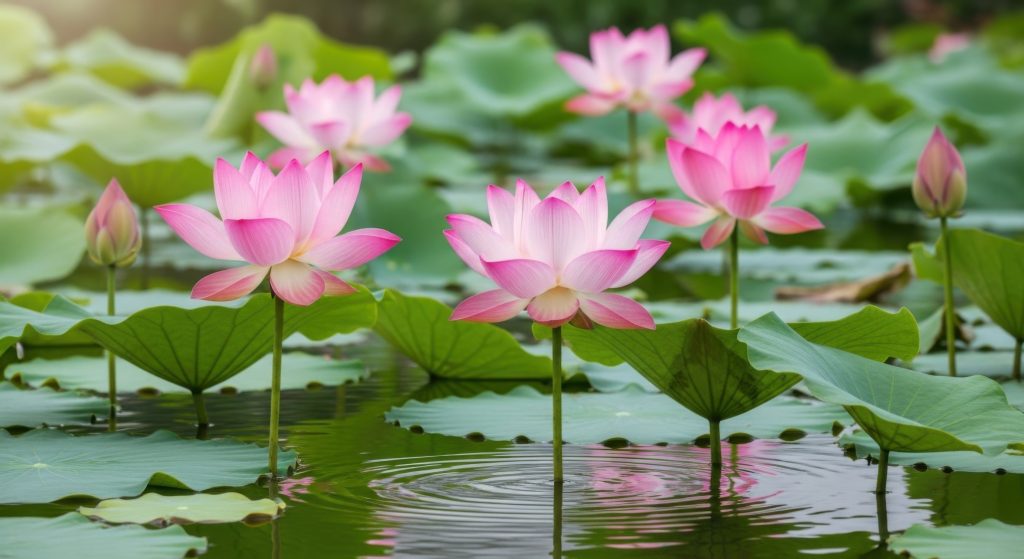
In Hindu thought, the lotus is far more than a symbol of beauty or purity. Known as Padma or Kamala, the lotus is praised in Vedic and Ayurvedic traditions as a sacred, life-sustaining food plant. From root to seed, flower to leaf, the lotus is described as nourishing the body while elevating the mind, making it a rare bridge between food, medicine, and spiritual symbolism.
Lotus in Vedic and Classical Tradition
The Rig Veda refers to the lotus as a giver of sustenance, placing it among the earliest known edible plants of sacred India. Later Ayurvedic texts such as Charaka Samhita, Sushruta Samhita, and Bhavaprakasha expand this understanding, describing the lotus panchanga (five usable parts) as cooling, rejuvenating, and life-supporting. In these texts, lotus is especially recommended for blood purification, fertility, longevity, and calming excess heat in the body.
The lotus is also inseparable from Hindu cosmology. Lord Brahma is said to arise from a lotus emerging from Vishnu’s navel, symbolizing creation nourished by purity. Thus, consuming lotus is traditionally seen as partaking in sattvic food that sustains both life and consciousness.

Edible Lotus Parts and Their Benefits
Lotus root (Padma-kanda)
It is consumed as a vegetable in many traditional households. Ayurveda praises it for strengthening digestion, improving circulation, supporting reproductive health, and aiding bowel regularity. Rich in fiber, iron, and vitamin C, it is especially valued for anemia and fatigue.
Lotus seeds (Kamal beej or Padma-bija)
These are described as rasayana foods. They nourish all dhatus, stabilize the nervous system, support fertility, and promote mental calm. Their use in fasting foods like makhana reflects their sattvic, grounding nature.

Lotus flowers and stamens
These are cooling and astringent. Classical texts mention their use in managing bleeding disorders, menstrual imbalance, burning sensations, and emotional agitation. They are also considered heart-purifying and mind-stabilizing.
Lotus leaves and stems
Ayurveda described them as purifying blood, relieving thirst, and reducing inflammation. Leaf preparations appear in treatments for diarrhea, skin conditions, and heat-related disorders.
Ayurvedic Energetics and Dosha Balance
Lotus is predominantly sweet, cooling, and mildly astringent. It pacifies Pitta, gently balances Kapha, and supports Vata when prepared with ghee or warm spices. Its sattvic quality is said to enhance clarity, emotional stability, and spiritual receptivity.

Cultural and Spiritual Meaning of Eating Lotus
In Hindu culture, food is not merely nourishment but an offering to life itself. Consuming lotus is traditionally viewed as aligning the body with purity, restraint, and divine order. It reflects the ideal of living in the world while remaining unstained, just as the lotus rises untouched from muddy waters.
Eat lotus-based foods to cool the body and calm the mind. Try this sacred plant to nourish vitality, clarity, and inner balance the Vedic way.
Feature Image Credit: Vecteezy.com (free for commercial use)