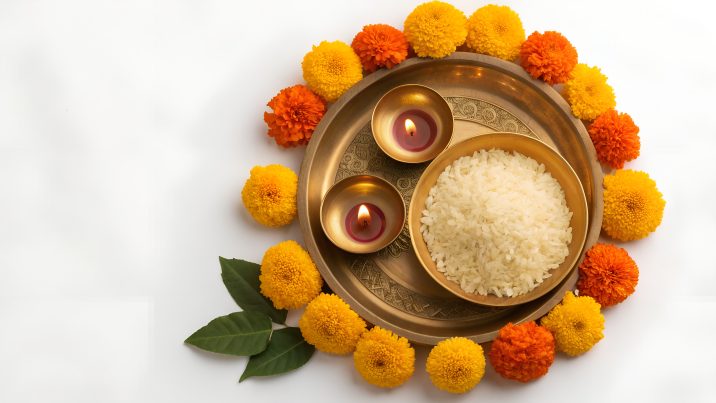
In Hindu tradition, Akshata refers to uncooked, unbroken rice grains offered during puja, paath, and sacred rituals. Though simple in form, Akshat carries deep spiritual meaning. From daily worship to grand ceremonies like Navratri and Durga Saptashati Paath, Akshata is considered a carrier of purity, intention, and divine blessings.
What Akshata Symbolizes in the Hindu Perspective?
The word Akshata means unbroken or undamaged. Spiritually, it represents wholeness, continuity, and completeness. Unlike broken grains, unbroken rice is believed to retain sattvic energy, making it suitable for invoking divine presence.
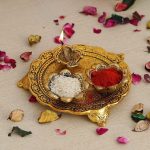
White Akshata symbolizes purity and spiritual clarity, often used in Vishnu or Shiva worship. When mixed with turmeric or kumkum, it becomes a symbol of Shakti, protection, fertility, and prosperity, making it essential in Durga and Ganesha pujas.
Mythological and Cultural Significance
Vedic and Puranic traditions describe rice as the essence of life and sustenance. Offering Akshata is symbolic of offering one’s ego-free self to the divine. In festivals like Durga Puja, Ganesh Chaturthi, and Navratri, Akshata is used to welcome the deity, mark sacred intent (sankalpa), and invoke abundance.
During weddings, thread ceremonies, and blessings, Akshata is showered to transmit prosperity and auspiciousness, reinforcing its role as a grain of continuity and lineage.
Key Ritual Uses of Akshata
During Sankalpa (Intention Setting)
Akshata is held in the right palm while stating one’s name, lineage, purpose, and prayer. During Sankalpa, it helps ground the mind, steady focus, and symbolically seal the vow before beginning puja, homa, or paath.
Offering to Deities (Devata Arpana)
Sprinkled on the idol, image, yantra, or kalasha as a mark of respect and invitation, signifying that the devotee is offering something complete and unbroken to the divine.
Aarti and Mantra Completion
After aarti or mantra chanting, Akshata is gently offered to conclude the ritual, indicating surrender and gratitude. This is common in Durga, Ganesha, and Lakshmi worship.
Pushpanjali and Collective Prayers
Mixed with flowers and offered by groups during festivals like Durga Puja or Navratri. It represents shared intention and collective blessing, especially during Durga Saptashati paath.
Substitute Offering (Pratinidhi Dravya)
When flowers, fruits, or grains are unavailable, Akshata acts as an acceptable sacred substitute, as it symbolically contains the essence of all offerings.
Blessings and Prasad Distribution
Energized Akshata is placed on the head or palm as prasada, believed to carry protective vibrations. Many households mix it with stored rice to extend blessings to daily meals.
Ritual Marking and Sacred Designs
Used to create symbols like Om, Swastika, Shree, or Navagraha patterns near the altar or threshold to invite auspicious energy and ward off negativity.
Life-Cycle Ceremonies
Showered during weddings, naming ceremonies, and initiations to invoke prosperity, continuity, and divine grace over new beginnings.
Daily Home Worship
In simple nitya-puja, Akshata allows even minimal rituals to remain complete, reinforcing that devotion matters more than elaborate materials.
Ayurvedic and Practical Perspective
From an Ayurvedic lens, rice is sattvic, which calms the mind and stabilizes emotions. When mixed with turmeric or kumkum, Akshata also gains mild antimicrobial properties, reinforcing cleanliness during rituals.
A Simple Sacred Reminder
Akshata teaches that wholeness attracts grace. Offering it daily reminds us to approach life and devotion with purity, steadiness, and complete intent—inviting prosperity, peace, and divine protection into the home.
Feature Image Credit: Vecteezy.com (free for commercial use)