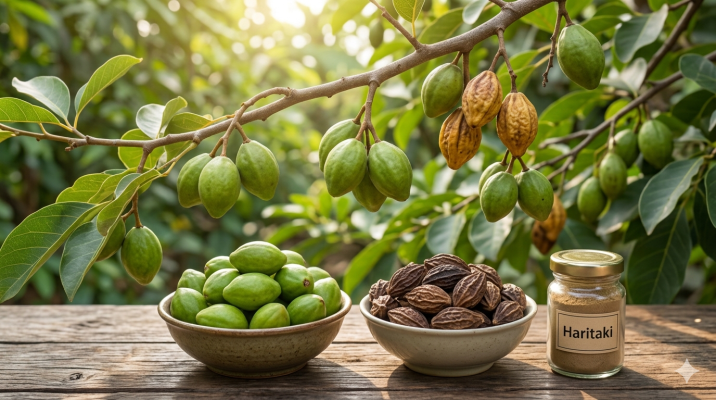
Haritaki (Terminalia chebula) is revered in Ayurveda as the “king of medicines” and forms a key component of the Triphala formulation. Classical Ayurvedic texts describe it as a rasayana, a rejuvenative substance that promotes longevity, vitality, and balanced bodily function.
Though tridoshic, it is especially supportive for individuals with aggravated Vata or Kapha due to its warming and scraping qualities.
General and Health Benefits
Traditionally, Haritaki has been used as a gentle laxative and digestive tonic. A small nightly dose (about ¼–½ teaspoon of churna with warm water) helps regulate bowel movements, relieves constipation and bloating, and enhances absorption of nutrients.
- Modern Research Findings
Modern herbal research and clinical summaries note antioxidant, anti-inflammatory, antidiabetic, and antimicrobial effects, suggesting benefits for cholesterol regulation, blood sugar balance, respiratory comfort, skin health, and wound healing.
- Rasayana Action
Its rasayana action works across the seven dhatus, supporting immunity, tissue repair, and vigor. Ayurvedic sources further regard it as beneficial for eye health, cognitive function, and cardiovascular strength.
Ayurvedic Properties and Dosha Effects
Haritaki is described as laghu (light), ushna (warming), and lekhana (scraping). These properties help clear ama (toxins), boost agni (digestive fire), and reduce Vata-related dryness, anxiety, and joint discomfort, as well as Kapha-related heaviness and mucus.
Texts associate it with sharper memory, better vision, and increased ojas, making it a valued rasayana during post-Panchakarma recovery or seasonal transitions. Overuse may aggravate Pitta, especially during hot seasons, so dosage and timing should be considered.
Spiritual and Traditional Context
Beyond physical benefits, Haritaki carries symbolic value, representing the removal of physical, mental, and spiritual impurities. Evening intake is traditionally favored for sattvic assimilation and is sometimes paired with mantra practice or post-Panchakarma routines.
Cultural Usage & Precautions
In many wellness households, Haritaki pairs with ginger or Triphala to amplify benefits. However, it may aggravate Pitta if overused in hot seasons and is generally avoided during pregnancy or severe weakness; consultation with a vaidya is advised.
Curious if Haritaki fits your wellness routine? Start with small, guided doses and seek advice from a qualified Ayurvedic practitioner to experience its benefits safely and mindfully.
Feature Image Credit: AI-generated image created with Google Gemini, March 19, 2026