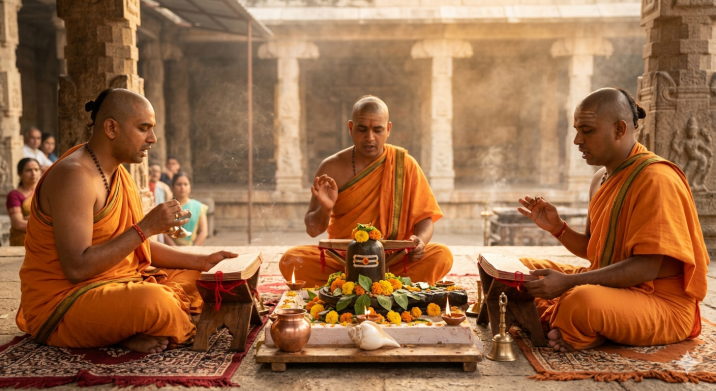
Rudri Path, often called Rudra Path or Shri Rudram, is the traditional recitation of Sri Rudram from the Yajur Veda. It contains two parts: Namakam, which offers repeated salutations to Rudra, and Chamakam, which prays for fulfillment and wholeness.
In ancient lore, Rudra is the fierce and healing form of Lord Shiva, present in thunder, wind, fire, and in the quiet places of the heart. To chant Rudram is to bow before that cosmic force which destroys ignorance and protects life.
Mythological Significance and Spiritual Depth
The sages of the Veda saw Rudra as both storm and medicine. Mythology describes him as the archer whose arrows remove afflictions and as the healer who cures disease. Sri Rudram praises him in all forms of existence, from the mountains to the forests and from warriors to farmers.
Tradition remembers that Krishna recited the Rudram daily, which reflects its status among the highest Vedic hymns. Namakam humbles the ego through countless “Namah” salutations, while Chamakam teaches the devotee to harmonize worldly desires with spiritual aspirations, preparing the path towards liberation.
Effects on Body and Mind
Rudri Path has a rhythmic breath, which works like a natural pranayama. This calms Vata, steadies the nervous system, reduces anxiety, and clears mental clutter. The vibrations influence the heart and throat centers, improving concentration, speech, and emotional balance.
Many practitioners notice reduced stress, better sleep, and lighter moods. Through devotional surrender, the mind becomes softer and more fearless.
Protective and Household Benefits
Astrological and folk traditions credit Rudri Path with protection from negative influences, illnesses, and obstacles in family life. It is considered auspicious on Mondays, Pradosha, and especially during Mahashivratri. The path is believed to invite harmony, courage, and clarity in decision-making.
How to Perform Rudri Path at Home
Rudri Path at home is performed with simplicity and devotion, focusing on purity of intent rather than ritual complexity.
- Clean the home mandir and arrange a Shiva lingam or image facing east or north
- Bathe and wear clean clothes before beginning the chant
- Light a ghee lamp and incense to create a sacred atmosphere
- Offer bel leaves, flowers, and water or panchamrit
- Invoke Lord Ganesha briefly to remove obstacles
- Take a silent sankalpa stating your intention
- Chant Namakam followed by Chamakam using a correct text or audio
- Perform simple abhishek if possible while chanting
- Conclude with aarti and offer prasad with gratitude
- Start with fewer anuvakas and maintain regular practice
Chant Rudri Path for inner peace, mental clarity, and protection from negativity. Even a few sincere verses can awaken calm, strength, and a deep connection with Lord Shiva.
Feature Image Credit: AI-generated image created with Google Gemini, March 23, 2026