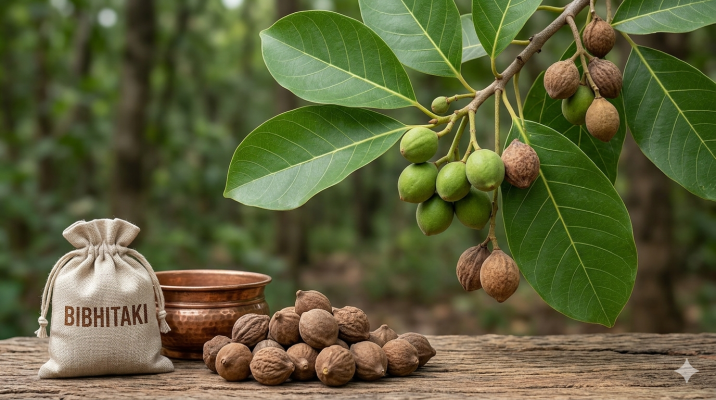
Bibhitaki, known in Sanskrit as Vibhitaki and botanically as Terminalia bellirica, is the second fruit in the classical Triphala combination along with Haritaki and Amla. Also known as Baheda in many folk traditions, this fruit is honored as the fruit “that removes the fear of disease.” The name Bibhitaki reflects both its therapeutic strength and long-standing reverence in Ayurvedic practice.
Bibhitaki in Ayurveda and Folk Tradition
Ayurvedic acharyas describe Bibhitaki through its qualities. In Ayurveda, Bibhitaki is valued for its kashaya rasa, which gives it astringent power. Its ushna virya indicates a warming influence on the body, and its madhura vipaka reveals a sweet post-digestive effect.
Bibhitaki is considered kaphahara and pittahara, meaning it can reduce excess Kapha and pacify aggravated Pitta. The fruit is traditionally used to clear ama from the respiratory channels and to improve the movement of prana through the chest and throat. It also nourishes dhatus and is known as keshya and chakshushya, suggesting benefits for hair and eyes.
Respiratory and Throat Support
Bibhitaki is particularly recognized for its role in Kapha disorders of the upper body. Classical physicians prescribe it for cough, hoarseness, asthma, and bronchitis. It works as a gentle expectorant that reduces phlegm without provoking Vata excessively. This makes it useful during seasonal changes and in chronic Kapha accumulations.
Digestive and Metabolic Actions
While primarily astringent, Bibhitaki also influences the digestive tract. It supports agni, aids in worm infestations, and reduces bloating, piles, and diarrhea. Though astringent, it can act as a mild laxative in constipation when used correctly. Its role in metabolic sluggishness and obesity arises from its ability to clear Kapha stagnation and water retention.
Folk Belief and Nourishing Benefits
Bibhitaki has been described as a rasayana for vitality and longevity. Its antioxidant and anti-inflammatory qualities benefit hair, skin, and joints. Traditional physicians have used it for premature greying, rheumatism, heart rejuvenation, wound healing, and immune strength. Some texts mention its contribution to aphrodisiac preparations as well.
Dosha Considerations and Safe Usage
Bibhitaki pacifies Kapha and Pitta while potentially aggravating Vata if taken alone in excess. For Vata types, combining it with ghee or pairing it with Haritaki is recommended. The usual dosage ranges from three to six grams of powder taken with honey or warm water, generally in the evening. It is often included in Triphala, Dashamula, and Baheda churna for detoxification and ojas building.
Pregnancy, severe Vata depletion, and improper combinations are considered contraindications in traditional practice.
A Fruit of Balance and Cleansing
Bibhitaki stands as one of Ayurveda’s most important fruits for cleansing Kapha and maintaining balance in the respiratory and digestive systems. Its place within Triphala highlights its gentle yet transformative nature, serving both as daily maintenance and as part of deeper therapeutic protocols.
Try Bibhitaki thoughtfully, guided by Ayurvedic tradition and personal need, and experience how a simple fruit from the forests of Bharat continues to support wellness in the modern age.
Feature Image Credit: AI-generated image created with Google Gemini, March 20, 2026