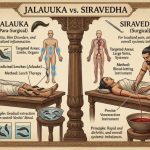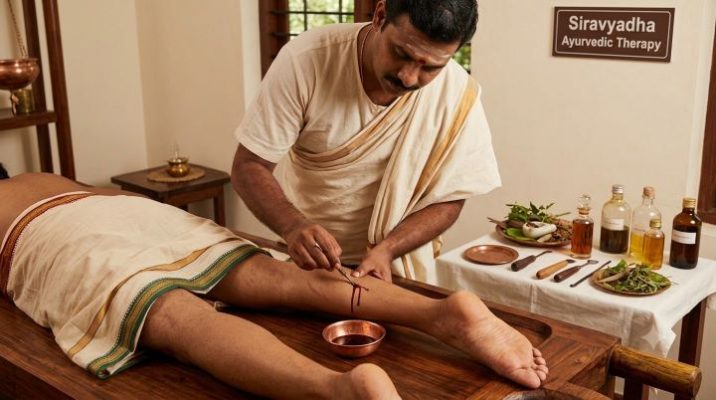
Siravyadha (also called Siravedhana) is a classical Ayurvedic para-surgical therapy that involves carefully puncturing a vein to remove vitiated or impure blood. The term comes from “Sira” (vein) and “Vyadha” (puncturing). It is regarded as the most important form of Raktamokshana (therapeutic bloodletting) and is described extensively in Ayurvedic surgical science (Shalya Tantra).
According to Acharya Sushruta, Rakta (blood) is considered the body’s fourth dosha because of its vital role in sustaining life, nourishing tissues, and maintaining health.
Why Siravyadha Holds Special Ayurvedic Importance
Ayurveda explains that impure blood (Dushta Rakta) can contribute to various diseases, inflammation, and tissue disorders. Siravyadha helps eliminate this vitiated blood, restore doshic balance, and support the body’s natural healing mechanisms.
Classical texts such as the Sushruta Samhita, Charaka Samhita, and Ashtanga Hridaya describe Siravyadha as a highly effective purification therapy with broad therapeutic applications.
Siravyadha Benefits for Blood Purification and Healing
This traditional therapy is valued for its ability to support overall health and recovery by:
- Detoxifying the bloodstream and removing impurities
- Providing rapid relief from pain, swelling, and inflammation
- Reducing venous congestion and pressure
- Improving circulation and oxygen delivery to tissues
- Supporting tissue repair and healing
- Restoring dosha balance and physiological harmony
- Enhancing joint mobility and flexibility
- Preventing disease progression linked to vitiated blood
- Promoting overall vitality and wellbeing
Conditions Commonly Managed with Siravyadha
Siravyadha is traditionally recommended for various disorders associated with impure blood, including:
- Vatarakta (gout)
- Arthritis and joint disorders
- Kushtha (chronic skin diseases such as psoriasis and eczema)
- Visarpa (erysipelas)
- Vidradhi (abscesses)
- Varicose veins and vascular congestion
- Chronic inflammatory conditions
- Certain headaches and migraines
- Raktapitta (bleeding disorders)
- Selected circulatory and musculoskeletal disorders
How Is Siravyadha Treatment Performed?
The procedure is carried out in three stages:
Purvakarma Preparation
Patient assessment, vein selection, sterilization, and preparation.
Pradhana Karma Procedure
An Ayurvedic practitioner punctures the chosen vein with specialized instruments and monitors blood flow carefully.
Paschat Karma Recovery
Bandaging, wound care, dietary guidelines, rest, and follow-up support are provided.
Siravyadha Safety, Contraindications and Precautions
This therapy should be avoided or performed only under expert supervision in cases of anemia, pregnancy, bleeding disorders, severe weakness, low blood pressure, acute fever, advanced age, or childhood. Proper patient selection and post-treatment care are essential for safe outcomes.
Siravyadha and Modern Relevance
Often compared to therapeutic phlebotomy in modern medicine, Siravyadha remains a time-tested Ayurvedic procedure for managing conditions linked to blood impurities, inflammation, and circulatory imbalance.
Experience Siravyadha under qualified Ayurvedic guidance to support blood purification, reduce inflammation, and promote healthier circulation and overall well-being.
Feature Image Credit: AI-generated image created with Google Gemini, July 5, 2026.