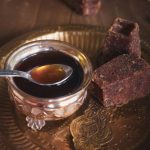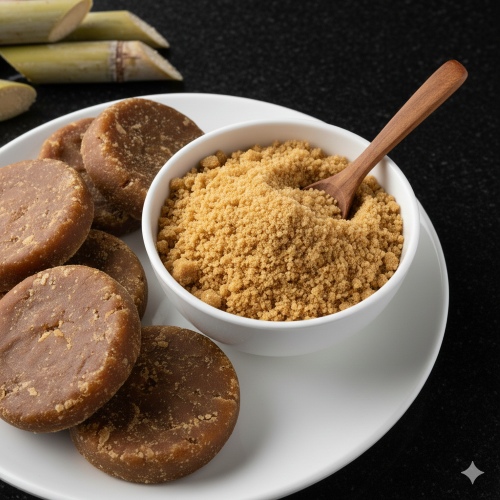
Jaggery or palm sugar, commonly known as gur in Hindi, is more than a traditional sweetener. Unlike refined sugar, it is unprocessed and retains natural minerals that support digestion, immunity, and overall vitality. Adding small amounts of jaggery to your daily diet can bring steady energy and long-term health benefits.
Jaggery in Ayurveda: A Warming, Nourishing Rasayana
Ayurveda classifies jaggery as madhura rasa (sweet in taste), ushna virya (warming in potency), and guru-snigdha (heavy and nourishing). Because of these qualities, it is especially beneficial for the Vata dosha, which is dry, cold, and light by nature.
Regular intake of jaggery helps relieve constipation, dryness, joint stiffness, fatigue, and irregular digestion. It gently stimulates Agni (digestive fire), making it useful for people with weak digestion or toxin buildup (ama).
In small amounts, jaggery also supports blood purification and strength, which is why it is traditionally advised in conditions like pandu (anemia).
What Makes Jaggery Nutritionally Valuable?
Jaggery is made by boiling sugarcane juice or palm sap without chemical refining. This simple process preserves essential nutrients, such as iron, calcium, magnesium, potassium, zinc, and small amounts of B vitamins. Because of its lower glycaemic impact than white sugar, jaggery releases energy slowly, helping avoid sudden sugar crashes.
Key Health Benefits of Eating Jaggery
Supports Digestion Naturally
Jaggery stimulates digestive enzymes and improves bowel movement. Consumed after meals or with a little ghee, it helps prevent constipation and bloating.
Helps Prevent Iron Deficiency
Its natural iron content supports haemoglobin levels, making jaggery especially beneficial for women, adolescents, and people prone to fatigue.
Boosts Immunity and Detoxification
Minerals like selenium and zinc help neutralise free radicals, while jaggery supports gentle liver cleansing and toxin elimination.
Provides Clean, Sustained Energy
Unlike refined sugar, jaggery nourishes the body without sudden spikes, making it ideal for daily energy needs.
Ayurvedic Perspective on Jaggery
In Ayurveda, jaggery is described as sweet, warming, and nourishing.
- It balances Vata, easing dryness, joint discomfort, and irregular digestion.
- It suits Pitta when taken in moderation.
- Excess intake may increase Kapha, so portion control is important.
Jaggery is often used as a rasayana to support strength, digestion, and vitality, especially during colder months.
How Jaggery Affects Pitta and Kapha
For Pitta, jaggery should be consumed in moderation. While its sweetness supports nourishment, excess intake may increase heat and acidity. Traditionally, washed or aged jaggery (dhauta guda) is recommended to reduce its heating nature.
For Kapha, jaggery can feel heavy if overused, leading to sluggishness or mucus formation. However, when paired with ginger, black pepper, or sesame seeds, it becomes easier to digest and supports energy without congestion.
Mythological and Cultural Significance of Jaggery
In Hindu tradition, jaggery symbolizes auspiciousness, sweetness, and continuity. It is offered during festivals like Makar Sankranti, Pongal, and Lohri, marking transitions, harvest, and new beginnings. Scriptures and Puranic references associate the donation of jaggery with merit, nourishment, and cleansing of negative karma.
The popular practice of ending rituals or vows with jaggery reflects the belief that life should conclude every effort with sweetness and balance.
Best Way to Consume Jaggery
- Limit intake to 10–20 grams daily
- Consume during the daytime when digestion is strongest
- Pair with ginger, fennel, or ghee for better absorption
- Choose organic or traditionally prepared jaggery
A Simple Habit for Long-Term Health
Replacing refined sugar with jaggery is a small dietary shift with meaningful benefits. Consumed mindfully, jaggery nourishes digestion, supports blood health, and brings natural warmth and energy to daily life.
Feature Image Credit: AI-generated image created with Google Gemini, February 24, 2026