Jalauka (leech therapy) and Siravedha (Siravyadha) are two classical Raktamokshana (bloodletting) therapies in Ayurveda that help eliminate vitiated blood (Dushta Rakta). While both aim to restore balance and support healing, they differ in their method, intensity, and ideal use.
Jalauka vs Siravedha: Understanding the Difference
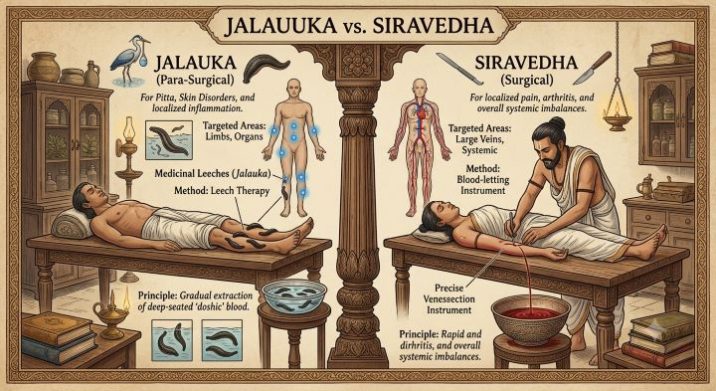
Jalauka Avacharana uses medicinal leeches that attach to the affected area and gently draw impure blood. It is considered a mild, controlled approach, making it suitable for children, elderly individuals, women, and patients who are weak or fearful. The procedure generally includes cleansing the treatment area, applying the leech, allowing it to feed naturally, carefully removing it, and providing proper wound care afterward.
Siravedha, also known as Siravyadha, involves puncturing a vein to release vitiated blood. It is a more direct and intensive bloodletting technique, traditionally recommended for conditions where venesection is specifically indicated. Because it requires venous puncture, it must be performed with precise anatomical knowledge, proper vein selection, and strict clinical supervision.
Jalauka and Siravedha Benefits
Both therapies aim to purify the blood and promote healing, but the choice depends on the patient’s condition and treatment needs.
- Jalauka offers a gentler approach to bloodletting for delicate or sensitive individuals.
- Siravedha provides more direct removal of vitiated blood when stronger intervention is required.
- Both therapies belong to Raktamokshana, an important Ayurvedic blood purification procedure.
- They help restore dosha balance and support the management of blood-related disorders when appropriately indicated.
- Proper patient selection, sterile technique, and post-procedure care are essential for safe and effective outcomes.
Which Method Is More Suitable?
Jalauka is generally preferred when a milder, less invasive treatment is needed, particularly in Pitta- and Rakta-related conditions. Siravedha is recommended when therapeutic venesection is indicated and must be performed by a qualified Ayurvedic practitioner.
Choose the appropriate Raktamokshana therapy under expert Ayurvedic guidance to support safer blood purification, better recovery, and long-term wellness.
Feature Image Credit: AI-generated image created with Google Gemini, July 14, 2026.